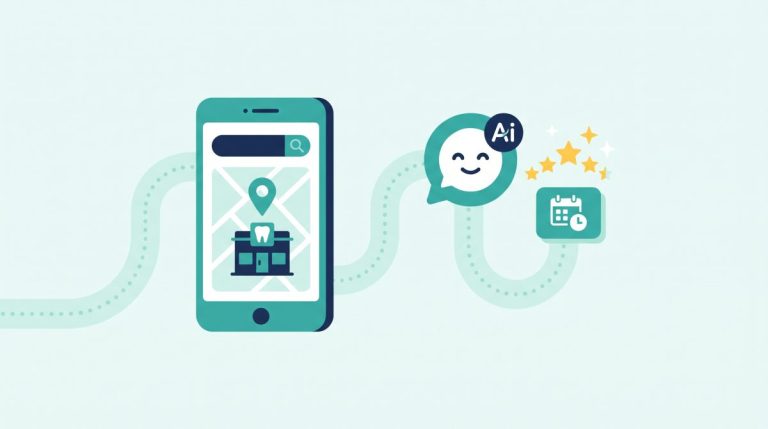
A New Jersey practice may serve patients from many cultural backgrounds, yet finding and booking care can still be unnecessarily difficult for Spanish-speaking patients. Bilingual dental marketing NJ removes that friction with clear information in Spanish, an easy contact path, and visible evidence that Spanish-language support is part of the practice—not an afterthought.
That matters at every stage of acquisition. Someone may find a practice through Google, encounter an English-only website, and leave before learning whether the office can help. Another may struggle to explain a concern by phone.
For New Jersey practices, including those in Hudson County, the opportunity is not a handful of translated words. It is a connected experience that supports the full patient journey.
What Bilingual Dental Marketing NJ Should Accomplish
The goal of Spanish dental marketing is simple: help Spanish-speaking people understand the practice, trust that it can serve them, and take the next step without searching for basic information in another language.
A strong strategy connects four parts:
- Spanish pages that explain services in useful, natural language
- A Google Business Profile that works for Spanish-language searches
- Paid search campaigns designed for how patients actually ask questions
- Trust signals that show what bilingual service looks like in practice
If these pieces point in different directions, the experience breaks down. A Spanish ad might lead to an English-only page.
For a broader view of the market, practices can also review our New Jersey dental marketing services. Those services should be evaluated as part of a complete patient experience, not as a separate multilingual campaign.
Build a Spanish Website That Answers Real Patient Questions
A translated website works best when it is written for patients, not produced by passing English copy through a translation tool. Literal translation can sound awkward or miss local meaning.
Start with new-patient questions:
- Which treatments does the practice provide?
- Where is the office, and is parking or transit information available?
- What should someone bring to the first appointment?
- How does the practice handle emergencies?
- Which payment or insurance information can be shared before the visit?
- Can the team communicate in Spanish, and in which situations?
Make the Spanish version easy to read on a phone: concise headings, short paragraphs, clear buttons, and descriptive link text. Visitors should not have to hunt for a phone number or wonder whether the form will be understood.
Keep English and Spanish pages connected. A Spanish page should link to useful English material when a full translation is unavailable, and the reverse should be true as well.
Cross-links help readers, but they are not how Google is told which pages are language versions of each other. For that, use hreflang. Google documents three equivalent ways to indicate alternate language or region versions of a page: HTML <link rel="alternate" hreflang="..."> elements in the page header, HTTP response headers, or a sitemap entry. Whichever method a site uses, each language version must list itself as well as every other version, and the alternate URLs must be fully qualified, including https://.
Each version should also carry its own self-referencing canonical URL, so the English and Spanish pages are not treated as duplicates of one another. Provide an x-default value as a fallback for visitors whose language does not match any listed version, which is useful on a language or region selector.
This is setup work, not a ranking tactic. Correctly marked language versions make the right page easier for Google to show to the right searcher, but no markup guarantees a position or a click.
For nearby communities, the location page should reflect what patients can access locally. A Jersey City dental marketing overview provides broader context, but the site still needs specific, verified information about the practice and its services.
Do not create a separate Spanish page for every slight service or neighborhood variation. The experience should be coherent, not a collection of near-duplicate pages.
Treat the Google Business Profile as a Local Welcome Sign
For many patients, the local pack appears before they reach the practice website. That makes the Google Business Profile one of the most important parts of Spanish dental marketing.
First, check whether the profile accurately reflects the practice. Categories, service names, hours, phone number, website, appointment links, and location details should be current. Any change should reflect what the practice offers.
If the practice can serve Spanish-speaking patients, the profile should say so clearly. Depending on available features and current guidance, this may include a Spanish business description, service descriptions, appointment links, or photos. Verify the exact implementation in the profile rather than relying on old tutorials.
Answer practical questions without overpromising:
- State whether team members can communicate in Spanish.
- Describe how Spanish support applies, such as phone, scheduling, or appointments.
- Avoid vague cultural claims or promises about outcomes.
- Keep the tone respectful; do not treat Spanish-speaking patients as a marketing segment to be courted with clichés.
A Spanish profile description can still leave people curious. The website should supply the context: team information, services, office details, policies, and a straightforward way to get in touch.
Build Paid Search Around Patient Questions
Spanish-language paid search is not an English campaign with translated keywords. It should reflect the questions and vocabulary used by New Jersey patients seeking dental care.
Group terms by intent instead of placing everything into one campaign. Searches may cover specific treatments, general dentistry, emergency care, location, cost, insurance, or Spanish-speaking staff.
Each group deserves a relevant landing page. If an ad promises Spanish appointments, the page should explain how the practice handles them.
For bilingual dental marketing NJ campaigns, review search terms often. Machine translation can make a query look relevant even when the need is different. Negative keywords can limit unrelated clicks.
Measure patient actions, not impressions alone. Track profile calls, booking starts, completed forms, and language at first contact. Do not infer that every Spanish-language lead converted because a campaign generated clicks.
Use Trust Cues That Feel Real
Cultural trust cues are not decoration. They answer a practical question: “Will this practice understand me?”
The strongest cues are specific. For example:
- Clearly labeled Spanish-language pages
- Information about which team members speak Spanish
- Photos that accurately represent the office and team
- Reviews from patients who actually visited
- Insurance and payment information presented without confusing terms
- A visible phone number, location, and contact path
- Clear details about what happens during a first visit
Patient stories are useful when they address the experience of being understood. A review about communicating care needs in Spanish is more credible than a broad diversity claim. Reviews must never misrepresent patient feedback.
Photography needs the same discipline. Use real office and team images rather than generic stock scenes. Alt text should describe the actual image, and staged cultural scenes are not proof of service.
If the practice wants to communicate cultural expertise, the evidence should be visible and accurate. That might include bilingual staff, community involvement, or a documented process for helping patients understand their options. It should not rely on assumptions about what Hispanic patients want.
Keep the Phone and Scheduling Experience Ready
Marketing generates attention, but the front desk determines whether it becomes an appointment.
A bilingual website or advertisement creates an expectation. If calls are answered only in English, patients may abandon the attempt. Decide which staff members can handle Spanish calls, what support is available, and how urgent requests are routed.
Explain what the practice can and cannot provide in Spanish. Fully bilingual clinical care is different from Spanish-language scheduling support; both can be useful, but they should not blur together.
For incoming calls, a simple checklist helps:
- Ask the patient’s preferred language without making assumptions.
- Confirm the reason for the visit and location needed.
- Offer the appropriate language support.
- Repeat insurance, scheduling, and preparation details for confirmation.
- Document only the information needed for the appointment.
Apply the same care to forms, reminders, and post-visit messages. Spanish support should continue after booking.
Build One Patient Journey, Not Separate Campaigns
The most useful audit is simple: follow a Spanish-speaking patient from search to booking.
Start with a Spanish keyword search. Does the Google Business Profile offer a clear path? After a click, can patients understand the offer without switching languages, find services and location details, tap the number, and understand the form? If they call, can the team help?
Then check the English version. It should make the same promises so neither language leaves patients guessing about appointments, support, or services.
This walkthrough can reveal issues keyword reports miss. Broken mobile buttons, vague insurance language, inconsistent hours, and mismatched service descriptions often matter more than minor ad-copy differences.
Check these regularly:
- Spanish search queries and paid-search terms
- Google Business Profile changes
- Translation accuracy and page maintenance
- Calls that began in Spanish
- Appointment completion after a bilingual inquiry
- Patient questions that staff cannot answer clearly
A dashboard should support decisions, not replace listening to patients and reviewing the live experience.
What to Measure
For New Jersey practices, bilingual dental marketing needs a practical measurement plan tied to where the patient journey breaks down.
Track Spanish-query impressions and clicks, visits to Spanish pages, and searches that still require a language switch. For local discovery, track calls, direction requests, and profile appointment actions. Group ad results by service, location, language, and patient action.
The strongest signals come after the click:
- A Spanish-language inquiry reaches the practice
- The patient understands the service and next step
- The appointment is scheduled
- The patient arrives with the expected preparation
Set a baseline before major changes. If language at first contact is not tracked, start with a simple staff process rather than pretending to have historical attribution.
A Practical Launch Plan
A New Jersey practice can build this in stages.
Start with accuracy. Confirm the English site, service descriptions, Google Business Profile, contact details, and staff language capabilities. Choose priority Spanish pages based on real questions and service demand. Use a qualified editor and check local meaning, not just language accuracy.
Connect the profile, ads, pages, phone workflow, and forms. Test each path on mobile and desktop. Ask bilingual team members or service partners to review the pages for natural language and cultural fit.
Launch with a small set of campaigns and clear conversion events. Review search terms, calls, appointment requests, and patient feedback. Expand what works while keeping the experience accurate and consistent.
The best bilingual marketing does not simply shout louder in Spanish. It removes the practical reasons a patient cannot move forward.
If your practice wants to review its website, local search presence, and Spanish patient journey, contact Doctors Marketing for a free consultation.
Ready to grow your practice?
Book a Free Strategy Call